
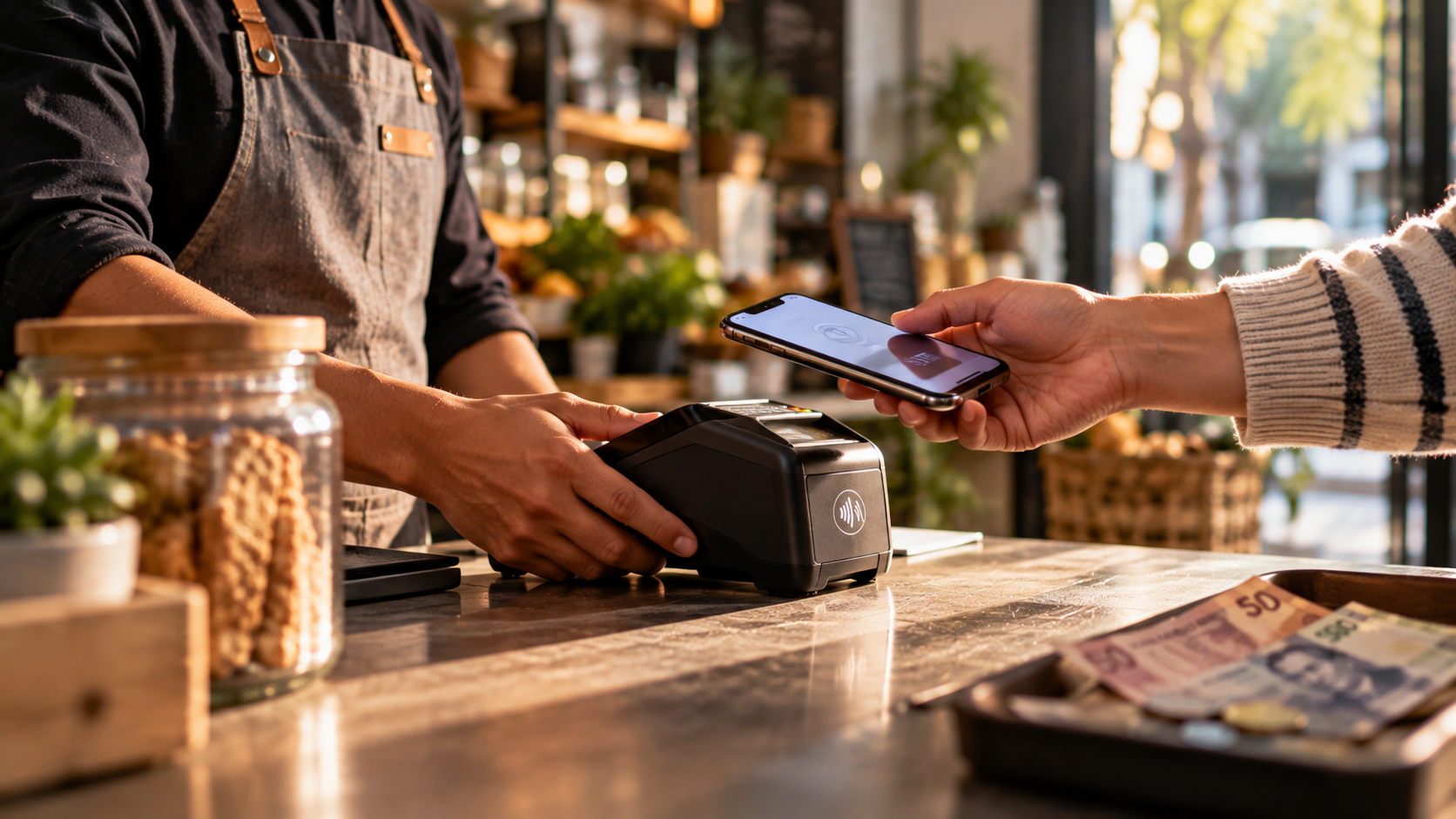
EAE Business School analyzes the challenges of a cashless economy in Mexico, from financial inclusion to cybersecurity and technological dependence
Digitalization should expand freedom of choice, not replace it with mandatory technological and financial dependence.”
— Dr. Juan Carlos Higueras, Vice Dean of EAE Business School
MEXICO CITY, MEXICO, October 19, 2026 / EINPresswire.com / -- Mexico continues to move toward a cashless economy. The Chamber of Deputies has already approved the new law that seeks to further incentivize the
use of methods such as transfers, cards, QR codes, and the use of CoDi and DiMo for payments.The last six months have been revealing in the adoption of this cashless economy. The Bank of Mexico reported that more than 1.4 billion transactions have been carried out, with card payments representing the majority, exceeding 47 million transactions per day.
Although the intention to reduce the use of banknotes and coins streamlines and promises to make transactions more secure, as well as providing greater traceability, the idea of a country's entire economy being based on virtual means presents significant challenges for all links in the consumer chain.
It's an issue with pros and cons, especially considering the significant size of the informal economy, territorial inequalities, and unequal access to banking services. This is explained by Dr. Juan Carlos Higueras, Vice Dean of EAE Business School , part of the Planeta Formación y Universidades higher education network .
“A less cash-based economy can contribute to faster and more decentralized payments, as well as simplifying companies' financial management, but only if there is an accessible and reliable digital infrastructure,” he warns. “Otherwise, we can't talk about a democratization of money. If someone lacks connectivity or digital skills, or if the country's infrastructure remains insufficient, an exclusively digital economy can create a new barrier to entry.”
Perhaps one of the sectors benefiting most from economic digitization is small and medium-sized enterprises (SMEs). The cashless economy offers clear advantages in terms of access to data on consumption patterns, allowing for a more personalized, direct, and accessible offering, as well as a decentralized one, eliminating previously essential requirements such as having a physical store.
However, it's important to consider that adopting these channels imposes fixed and variable costs, such as transaction fees, device acquisition, and dependence on technology intermediaries, which directly impact already reduced operating margins. Therefore, a crucial issue is the transition process, which must be smooth to avoid resistance due to the premature elimination of cash, potentially excluding consumer groups and increasing costs for small businesses.
And in terms of deployment, in addition to the inclusion challenges posed by the population's digital divide, there are the vulnerabilities that come with extreme technological dependence.
By eliminating physical cash, payments become subject to the whims of massive power outages, banking platform failures, internet service interruptions for any reason, or even cyberattacks, which is a worrying sign for the population.
Furthermore, the complete replacement of cash alters the nature of security and personal privacy. While digital environments allow for the implementation of controls to monitor fraud and money laundering, they also open the door to cybercrime, which is already a constant struggle in the country.
“Despite all the promises and benefits, cash remains a safeguard against the inevitable failures of the digital world. Moreover, no system is infallible or 100% secure,” Higueras warns. “Banks, businesses, companies, and the government must ask themselves what mechanisms exist to manage risks and how quickly operations can recover after an interruption. Resilience should be as important a criterion as speed or convenience.”
According to the expert, the transition the country continues to drive should not be framed as an exclusionary dilemma between physical and virtual, but rather as the development of a hybrid model capable of maintaining secure alternatives to guarantee economic stability.
“Mexico must move toward a less cash-dependent economy, but we must not confuse the digitization of payments with the modernization of the economy. The goal should not be to achieve a cashless economy, but one in which individuals and businesses can choose efficient payment methods without that choice depending on their socioeconomic level or technological capacity. Digitization should expand freedom of choice, not replace it with mandatory technological and financial dependence,” concludes the expert from EAE Business School.
About EAE Business School:
EAE Business School is an international business school, part of the Planeta Formación y Universidades higher education network, with a cutting-edge and innovative vision for addressing the challenges of the 21st century. More than 80,000 students from over 100 different nationalities have studied at EAE. It boasts a faculty of 500 professors (35% international), most of whom combine their professional and academic careers. The school has international partnerships with prestigious institutions such as Babson College, among others.
In its commitment to the professional development of its students, EAE Business School has managed over 2,000 job offers this year, thanks to a network of partner companies. This data has allowed EAE to increase its students' job placement rate and the ROI of its master's programs, earning it recognition in the Bloomberg and QS international rankings.
EAE Business School is part of Planeta Formación y Universidades, the international higher education network of Grupo Planeta. It comprises twenty-two educational institutions in Spain, Andorra, France, Italy, North Africa, the United States, and Colombia. Each year, students from over 100 different nationalities study at its business schools, universities, specialized graduate schools, and vocational training centers.

No comments:
Post a Comment