
Fires 2026
Beirut, LEBANON, July 27, 2026 /EINPresswire.com/ -- Greenpeace Middle East and North Africa is deeply concerned by the devastating wildfires that have swept through Algeria and the rapid spread of fires in neighboring Tunisia, as well as the forest fires that have broken out in Morocco amid a severe
heatwave. These climate disasters reveal the accelerating pace of the climate crisis in the region. These fires are not isolated weather events, but rather part of a dangerous and increasingly frequent and intense pattern, fueled by sharp temperature increases and prolonged droughts. This trajectory will only worsen unless decisive and immediate action is taken to mitigate the impacts of the climate crisis and strengthen communities' resilience.
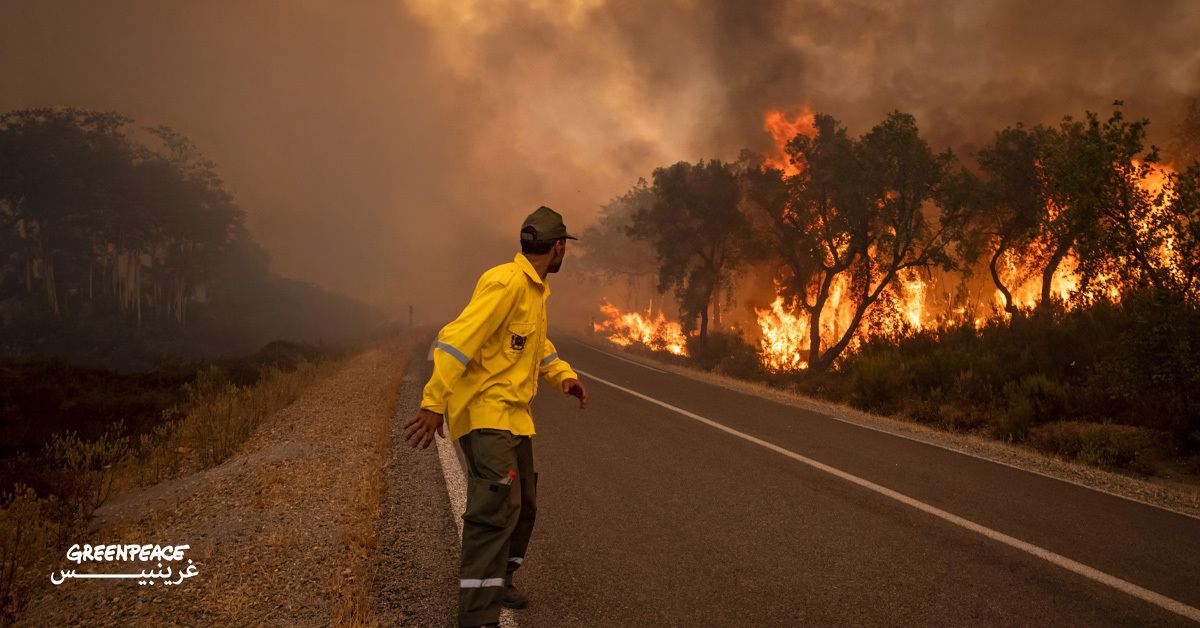
In Algeria, a catastrophic wave of wildfires that swept through several northern provinces has resulted in the deaths of at least six people, injured dozens, displaced residents from affected areas, and damaged approximately 150 homes. In Tunisia, the wildfire crisis escalated during July, with more than 600 fires recorded, consuming over 240 hectares of land. Similarly, a severe heatwave triggered forest fires in the Tamtamazor region of Taroudant province in Morocco, further highlighting the growing risk of fires linked to rising temperatures and extreme weather conditions in the region.
Greenpeace Middle East and North Africa emphasizes that these disasters represent a serious indicator of the worsening climate crisis in a region already among the most vulnerable in the world, where temperatures are rising at nearly twice the global average. These fires cannot be viewed as isolated or fleeting events, but rather as part of an accelerating pattern of extreme weather events that are becoming more frequent and intense due to rising temperatures, worsening droughts, and the degradation of ecosystems.
In this context, Kenzi Azmi, Regional Campaigns Manager at Greenpeace Middle East and North Africa, stated, “The losses caused by these fires extend far beyond the direct material damage; they affect the right to life, safe housing, and a healthy environment, and threaten the security of local communities and their ability to withstand successive climate crises.
Behind every fire are stories of families who have lost their homes, communities forced to flee their lands, and ecosystems damaged in ways that could last for decades. Protecting these communities requires more than just responding after the disaster; it demands serious investments in adaptation and prevention, along with holding accountable the countries and entities most responsible for historical emissions, and ensuring the availability of necessary climate finance for affected communities.”
The fires currently raging in Algeria, Tunisia, and Morocco are a stark reminder of the perilous future that awaits the region unless urgent and radical climate action is taken. The climate crisis is not measured solely by temperature increases or the number of recorded disasters, but by the scale of human suffering it causes.
While some fires may be directly linked to human activity, climate change is exacerbating the conditions that make them more likely to start, spread faster, and have more devastating impacts. Without a drastic and rapid reduction in global emissions, coupled with increased investment in adaptation and resilience systems, communities in the Middle East and North Africa will face heightened risks of more intense heat waves, more widespread fires, worsening water scarcity, and more frequent climate crises.

No comments:
Post a Comment