
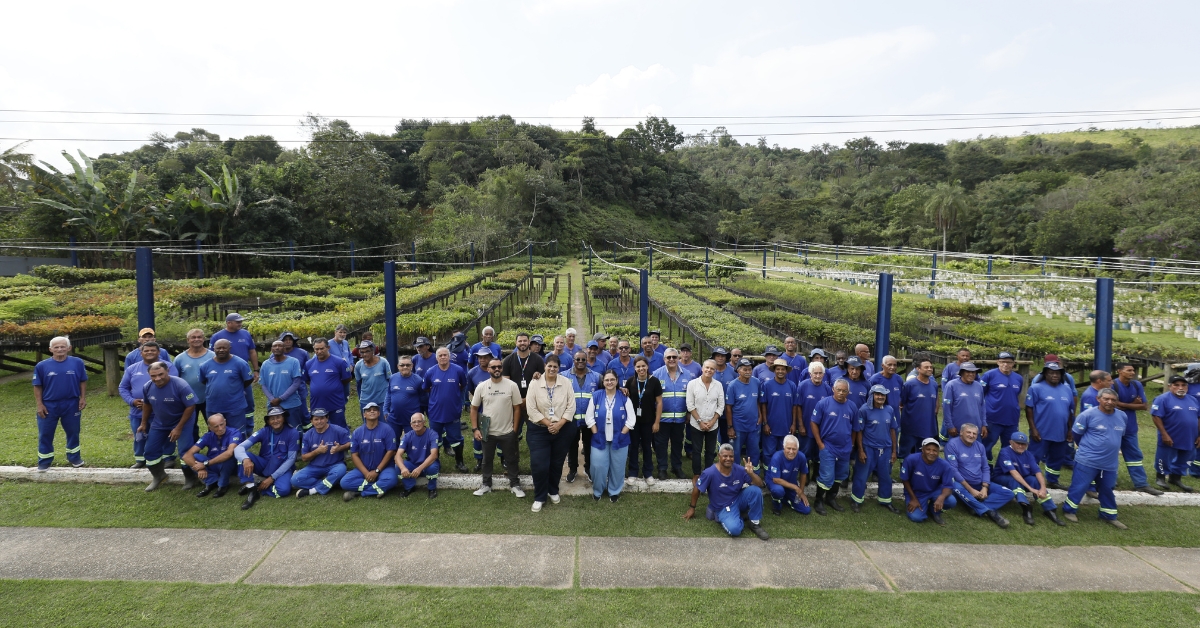
Team and participants of the Replanting Life program in a native seedling production area in Rio de Janeiro. The initiative trains and employs incarcerated individuals in ecological restoration activities.
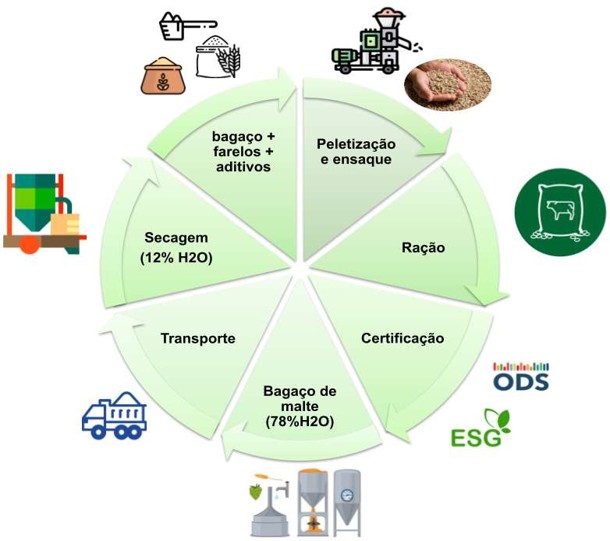
Biovalor's production flow transforms malt bagasse into pelleted animal feed, reintegrating agro-industrial waste into the family dairy farming production chain.
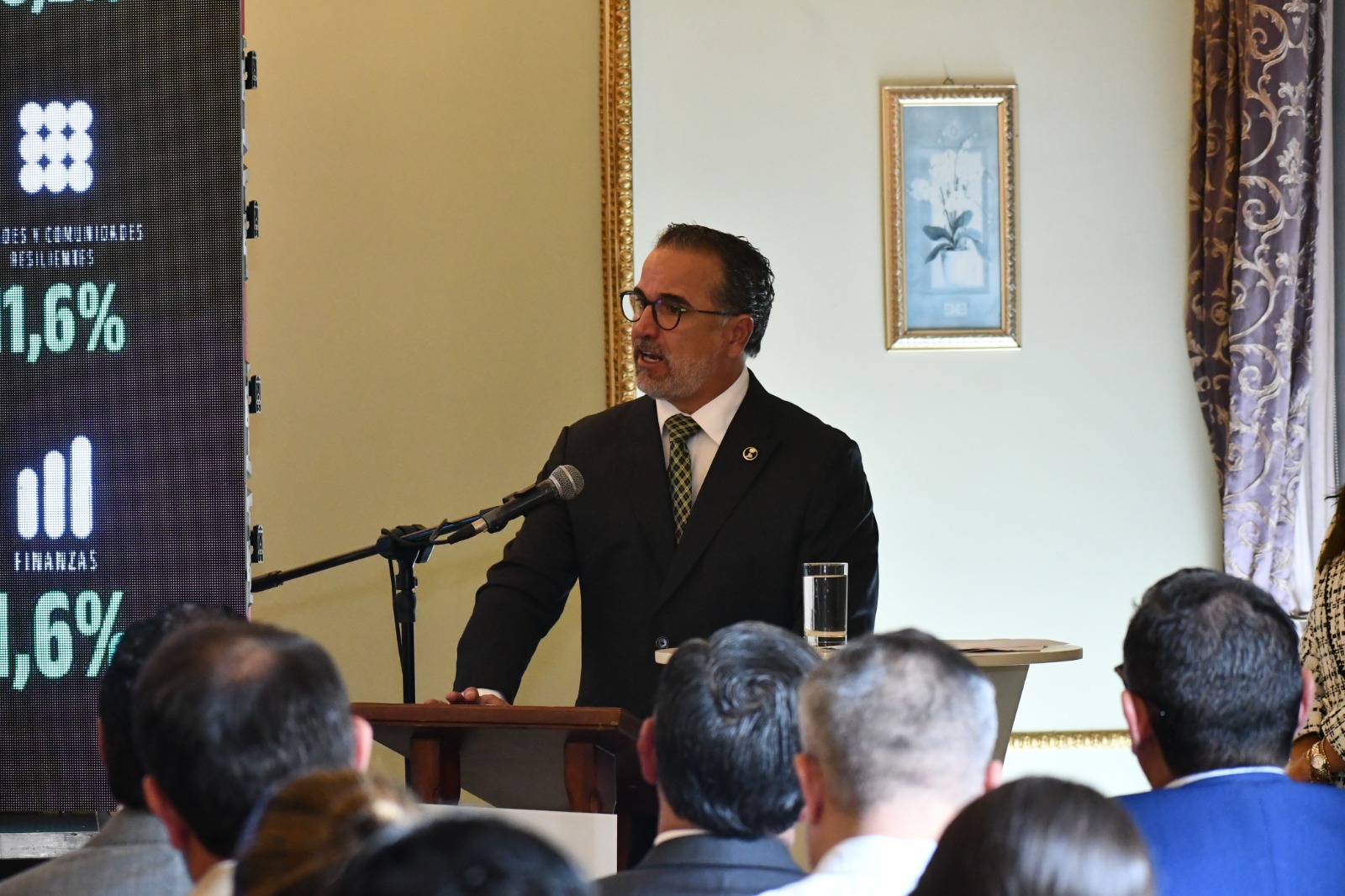
Gustavo Manrique, president of the Green Awards, during the announcement of Cuenca, Ecuador, as the host city for the 2026 Green Awards.
Projects in Rio de Janeiro and Fortaleza combine environmental restoration, social reintegration, and a circular economy.
CUENCA, AZUAY, ECUADOR, September 15, 2026 / EINPresswire.com / -- Initiatives developed in Rio de Janeiro and Fortaleza are among the 52 finalist projects for the 11th edition of the Green Awards , which will be held from October 19 to 22 in Cuenca , Ecuador.
The Brazilian projects combine
environmental restoration and social reintegration, and propose the use of agro-industrial waste as an alternative to strengthen family dairy farming.Transforming ecological restoration into an opportunity for social reintegration for incarcerated individuals and reusing agro-industrial waste in the production of new inputs for family livestock farming. These are the proposals that led two Brazilian projects to the final of the 2026 Green Awards.
Replanting Life: Ecological Restoration for Social Reintegration, developed in Rio de Janeiro, and Biovalor – Circular Animal Feed for Family Dairy Farming, from Fortaleza, were selected as finalists for the 11th edition of the Green Awards, which brings together environmental and social solutions developed in different countries in Latin America and the Caribbean.
The selection process began with an international call that received 2,087 applications from 29 countries and 613 cities, revealing the diversity of initiatives developed in the region to address environmental, social, and productive challenges.
Environmental restoration as a path to social reintegration.
In Rio de Janeiro, the Replanting Life project is a finalist in the Human Development category. Led by Alan Henrique Marques de Abreu, the initiative connects two fronts: environmental recovery and the creation of job opportunities for incarcerated individuals.
The program promotes training and employment in ecological restoration activities, making ecosystem recovery a tool to support social reintegration processes.
Brazil has over 700,000 people deprived of their liberty. In Rio de Janeiro, less than 4% of this population has access to work. At the same time, according to data presented by the initiative, only about 27% of the original Atlantic Forest remains. It is in this context that the project articulates environmental recovery, training, and the generation of opportunities.
Agro-industrial waste returns to the production chain.
In Fortaleza, the Biovalor project – Circular Animal Feed for Family Dairy Farming – is a finalist in the Circular Economy category.
The initiative transforms agro-industrial waste into productive inputs, using biotechnology and pelleting processes to add value to materials such as malt bagasse and reintroduce them into the production chain.
The model also integrates rural cooperatives into a circular supply chain, with the aim of strengthening the economic and environmental sustainability of family dairy farming, reducing organic waste and decreasing emissions through the partial substitution of conventional inputs.
The two Brazilian projects are among the 52 finalists from 12 countries, distributed across ten categories of the 2026 Green Awards. Brazil's participation highlights two complementary approaches to sustainability in the region: solutions that combine ecosystem recovery and social impact, and production models that transform waste into new resources.
“Innovation in Latin America has an extraordinary characteristic: it stems from the ability to connect knowledge, territory, and technology. When science engages with ancestral wisdom, communities, and entrepreneurship, solutions emerge that address concrete needs and have the potential to be replicated in other parts of the world. This is one of the great assets of our region,” stated Gustavo Manrique, president of the Green Awards.
The two Brazilian finalist projects will participate in the 2026 Green Awards Global Event, from October 19 to 22, in Cuenca, Ecuador. The program will bring together projects, experts, partner organizations, and representatives of the sustainability ecosystem, in addition to the jury's deliberation and the awards ceremony.
About the Green Awards:
The Green Awards is a regional movement that identifies, connects, and expands the reach of projects and leaders developing sustainable solutions in Latin America and the Caribbean. For over a decade, it has received more than 22,000 projects from 53 countries, establishing itself as one of the region's leading events dedicated to environmental innovation, social impact, and sustainability.
The 2026 edition has the support and participation of UNDP, VGV CORP, AENOR, IOM, ESPOL, ANDOR - BYD, Agua Cielo, LATAM, Banco del Austro, Grupo Vintimilla, Coca-Cola, Indurama, CRISFE, Banco Pichincha, ECOGAL, ARTESA, Art Hotels, Tim Ballard Foundation, Graiman - Atenas, Banco Guayaquil, INHAUS and GET, organizations and companies that are part of the Green Awards ecosystem and strengthen its capacity for articulation between international organizations, academia, the private sector and other actors committed to sustainability.
The Green Awards also features an international jury and an Advisory Board comprised of leaders from multilateral organizations, development banks, conservation, academia, the private sector, and international funds. Its model combines an international call for entries, technical curation, strengthening and acceleration programs, visibility, and an international meeting that connects entrepreneurs, companies, governments, academia, and multilateral organizations to generate opportunities and amplify the impact of participating solutions.
The 2026 edition will be held from October 19 to 22 in Cuenca, Ecuador, bringing together projects, leaders, organizations, and companies around an agenda dedicated to sustainability, innovation, and the transformation of the region.

No comments:
Post a Comment