
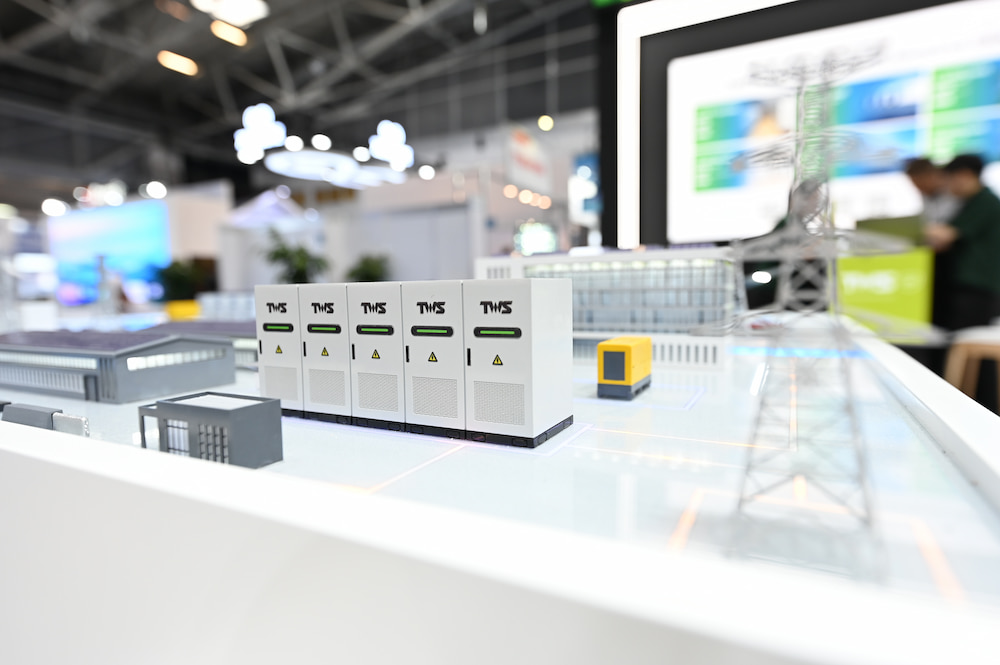
A zero-carbon industrial park model
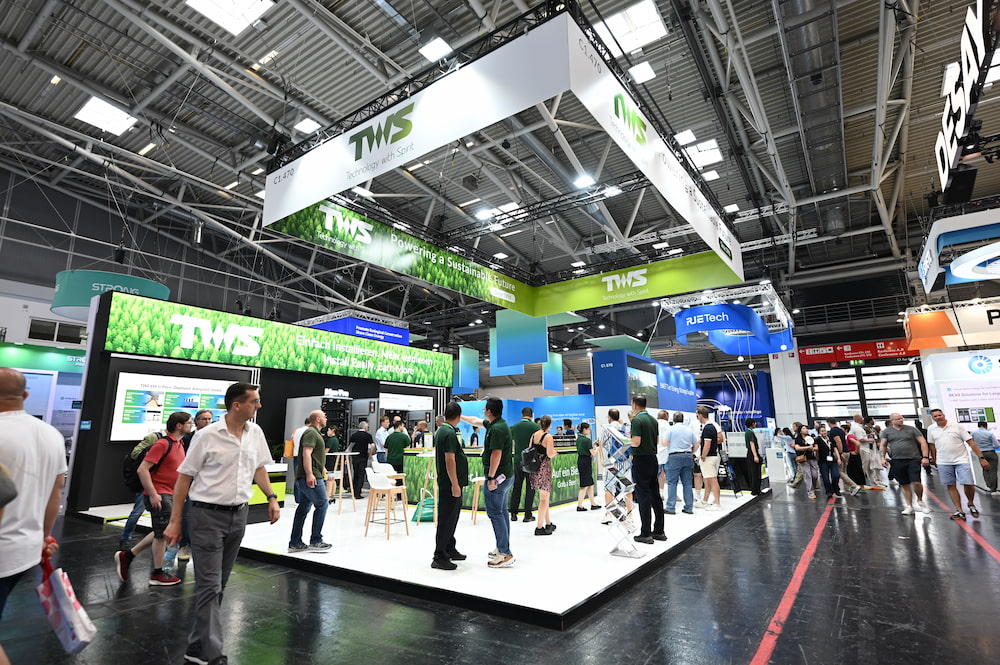
TWS ESS experts engaging with key European partners at ees Europe 2026 in Munich to gather first-hand market insights
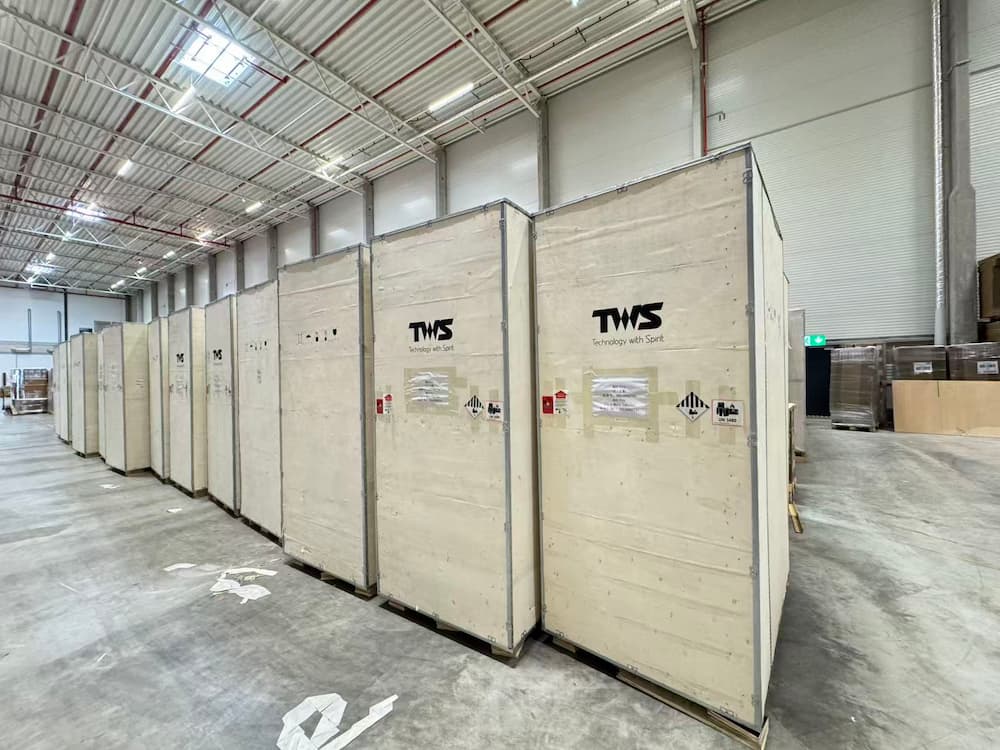
Inside the TWS ESS localized warehouse facility in Germany, stocking ready inventory of Max-Pro battery energy storage units.
MUNICH, GERMANY, July 15, 2026 /EINPresswire.com/ -- The doors have closed on ees Europe 2026, and it has turned out to be a highly fruitful milestone for TWS Technology ESS. Every single day of the exhibition, our booth was packed with local
EPC partners, developers, and new prospects. We exchanged invaluable insights, discussed upcoming project pipelines, and learned immensely about the rapidly shifting compliance needs of the European energy sector.Major Market Trends and Policy Shifts in Germany
The German market is currently navigating a profound structural transformation where energy strategy is no longer just about buying hardware—it is about navigating strict compliance windows to lock in project bankability. We have observed these key market trends reshaping the industry:
The "First Ready" Grid Connection Model:
As of April 1, 2026, German transmission system operators (TSOs) have completely scrapped the old "first come, first served" model [1]. Under the new maturity-based procedure (Reifegradverfahren), grid capacity is strictly allocated via a scoring system evaluating site control (30%), advanced permitting (30%), technical/electrical feasibility (30%), and financial capability or co-location benefits [1]. Only mature, bankable projects secure a grid connection offer.
The Grid Fee Exemption & Grandfathering Countdown:
Following extreme market anxiety regarding earlier regulatory proposals, the Federal Network Agency (Bundesnetzagentur / BNetzA) clarified on June 12, 2026, that it will preserve the full 20-year grid fee exemption for projects under development [2]. However, developers face a strict countdown: to secure this vital grandfathering protection, projects must reach a qualifying Final Investment Decision (FID) before the final AgNes rules (Allgemeine Netzentgeltsystematik Strom) enter force (end of 2026/early 2027) and be commissioned by August 4, 2029 [2, 4]. This strict FID standard requires a binding grid connection commitment alongside non-terminable procurement contracts covering roughly 50% of the investment volume [2]. Projects missing this window will transition to a capacity-based fee structure estimated at EUR 4–7/kW/year [2, 4].
Decarbonization Mandates and Financial Support:
The approved industrial electricity price law provides heavy financial relief (up to 50% wholesale price reduction) to energy-intensive manufacturers, but requires them to reinvest at least 50% of the aid into deep decarbonization such as BESS within 48 months [5]. Additionally, structured financial relief, regional grants, and low-interest funding channels remain highly active for small-and-medium enterprises (SMEs) and public organizations (such as schools and community housing) aiming to insulate themselves from volatile price spikes [5].
Geopolitical Pressure and the Rise of Heat Pumps:
While the recently approved Building Modernisation Act (Gebäudemodernisierungsgesetz) removed the strict 65% renewable energy mandate for new heating systems, traditional systems face a tightening quota for climate-neutral fuels starting in 2029 (the bio-ladder starting at 10% in 2029 and reaching 60% by 2040) [3]. Driven by the recent memory of maritime blockages at the Hormuz Strait and the fragile nature of geopolitical balances, local companies are racing to achieve ENERGY INDEPENDENCE via electrification, leading to a robust rise in heat pump sales [3]. However, because heat pump load profiles rarely match local solar generation, installing a Battery Energy Storage System (BESS) is highly necessary to avoid high peak grid prices.
Energy Solutions Tailored for the European Energy Transition
To assist with the rapid response required for the late 2026/early 2027 FID (Final Investment Decision) deadlines and to successfully clear the German transmission system operator (TSO) project maturity scoring, TWS Technology ESS showcased a powerful lineup of certified, high-performance hardware solutions:
The Max-Series (Max-Pro & Max-Solaris):
These 262kWh liquid-cooled outdoor cabinets provide seamless PV-ESS-Heat Pump integration. Capable of handling intense C&I (Commercial & Industrial) load shifting and demand-side flexibility, these systems allow for the precise fulfillment of state decarbonization mandates within the required 48-month window. Crucially, a dedicated European warehouse maintains ready stock for the Max-Pro, giving partners a significant competitive advantage in meeting procurement quotas for fast FID validation.
The PowerCore Liquid-Cooling Energy Storage Container:
This large-scale system packs an impressive 5,015kWh (5MWh) of rated DC energy into a single standard 20ft container. Equipped with an advanced triple fire suppression architecture, the system slashes per-kWh costs by 30% and saves over 40% on layout footprint via compact side-by-side spacing. This high-capacity solution provides the flexible topology and structural density required for major grid-side or energy-intensive user-side installations.
The PowerM-Pro AC/DC Mobile Storage Station:
This 2.5MWh to 3.3MWh containerized, plug-and-play solution delivers full deployment in under 4 hours. It provides the immediate asset flexibility and rapid execution that engineering, procurement, and construction (EPC) firms need to satisfy TSO grid connection studies and meet tight infrastructure timelines.
TWS ESS expresses appreciation to all attendees who visited the booth during this trade fair. For those unable to consult with the engineering team on-site, TWS ESS global experts are available to provide custom, data-backed system layouts designed to fast-track project maturity.
Interested parties are invited to contact the team to secure grid capacity and optimize BESS layouts:
Email: infoess@tws.com
Website: www.tws-bess.com
💡 References
[1] Herbert Smith Freehills Kramer, From "First Come" to "First Ready": Germany's New Maturity-Based Grid Connection Process for BESS and Large-Scale Consumers, April 15, 2026.
[2] Herbert Smith Freehills Kramer, German grid fee reform for BESS: BNetzA preserves grand-fathering protection and unveils future framework, June 12, 2026.
[3] Argus Media, German government approves building modernisation law, May 14, 2026.
[4] Pexapark, German Grid Fee Reform Set to Introduce New Capacity Charges for Generators and BESS as of 2029, June 9, 2026.
[5] KPMG AG, How companies should react to electricity prices and grid expansion in 2026, February 26, 2026.

No comments:
Post a Comment