
Ayurveda
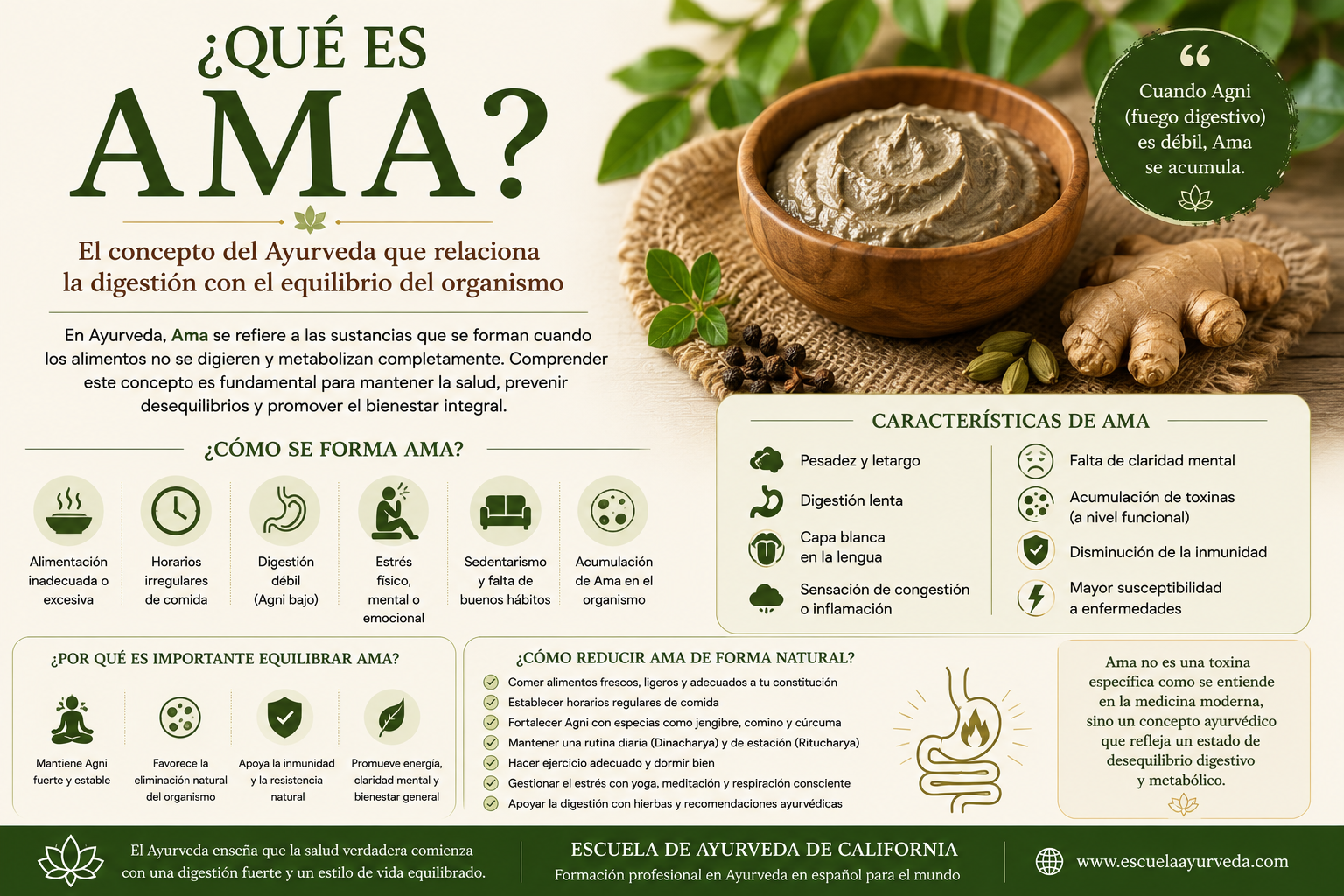
In Ayurveda, Ama is a term used to describe the accumulation of substances not completely transformed by the digestive and metabolic process.
Agni symbolizes the body's ability to transform food into energy and healthy tissues.”
— Santiago Suarez CAS
LIMA, LIMA, PERU, October 21, 2026 / EINPresswire.com / -- The California School of Ayurveda is now accepting applications for its 2027 Home Cleansing Program. Designed by Dr. Marc Halpern, founder of the California School of Ayurveda, the Home Cleansing
Program allows people to discover how to rid their bodies of ama (toxins) from the comfort of their own homes. Based on traditional Ayurvedic principles, the program offers the opportunity to unlock your highest potential. The complete cleanse lasts five weeks and includes weekly group support.In this workshop, you will learn:
Nutrition: Learn to prepare the famous kitchari food used in Ayurvedic cuisine.
Learn to purify and tone your body at home with Ayurvedic practices.
As interest in Ayurveda grows, one of the most frequently asked questions among those beginning to explore this tradition is: What is Ama?
Although the word is often translated as "toxins," specialists clarify that this interpretation is incomplete. Ama is actually a concept from Ayurveda that refers to substances that, according to this tradition, originate when digestion and other metabolic processes are not functioning optimally.
This principle is one of the pillars of Ayurvedic medicine and is closely related to nutrition, digestion, lifestyle, and maintaining the body's balance.
What does Ama mean?
The word Ama comes from Sanskrit and can be understood as "uncooked," "unripe," or "not fully transformed."
In Ayurveda, this term describes the waste products that, according to its traditional principles, can be generated when food is not properly digested and metabolized.
Beyond a specific substance, Ama represents a functional concept that helps explain how certain imbalances can develop when the body loses its natural capacity for transformation.
The Importance of Agni
To understand Ama, it is necessary to understand another fundamental concept of Ayurveda: Agni, known as "digestive fire."
Agni symbolizes the body's ability to transform food into energy and healthy tissues.
When Agni functions efficiently, digestion is proper, and the body makes better use of nutrients. However, when this process weakens, Ayurveda maintains that Ama (toxins) can begin to form.
Therefore, strengthening digestion is one of the main goals of Ayurvedic diet and routines.
How does Ayurveda explain the formation of Ama?
According to classical texts, various factors can contribute to the formation of Ama, including:
excessive or insufficient food intake;
eating without appetite;
irregular meal times;
frequent consumption of highly processed or difficult-to-digest foods;
prolonged stress;
lack of rest
; sedentary lifestyle
; and unbalanced lifestyle habits.
From this perspective, Ama depends not only on the food consumed but also on the individual's capacity to digest and metabolize it.
A Preventive Approach:
One of the most distinctive characteristics of Ayurveda is its emphasis on prevention.
Instead of waiting for illness to appear, this tradition promotes habits aimed at maintaining healthy digestive function and overall balance in the body.
Traditional recommendations include:
eating at regular times;
consuming fresh and recently prepared foods;
avoiding overeating;
adapting diet to individual needs;
getting adequate sleep;
maintaining moderate physical activity;
and managing stress through practices such as breathing exercises, meditation, or yoga.
These practices are part of the Ayurvedic lifestyle and aim to promote efficient digestion according to traditional principles.
Ama and Scientific Research:
Ama is a concept unique to Ayurveda and has no direct equivalent in modern medicine.
For this reason, it should not be interpreted literally as a toxin identifiable through clinical analysis.
However, some researchers have explored possible parallels between the importance Ayurveda places on digestion and the growing scientific interest in gut health, the microbiota, chronic low-grade inflammation, and metabolism.
While these areas share the recognition that digestion plays a significant role in health, experts emphasize that traditional Ayurvedic concepts and current biomedical models belong to different theoretical frameworks.
Much More Than a Cleanse: With the rise in Ayurveda's popularity, the idea that Ama can be eliminated through "quick detoxes" has also spread. Some websites recommend a quick Ayurvedic detox with mung dal
recipes . Experts warn that this interpretation oversimplifies the concept.
In Ayurvedic tradition, digestive balance doesn't depend on miracle products or extreme cleanses, but rather on the consistent maintenance of healthy habits, a proper diet, and a balanced lifestyle.
The goal isn't to eliminate a specific supposed toxin, but to support the body's natural functioning through sustainable practices.
Understanding Ayurveda
requires knowledge of other fundamental Ayurvedic concepts, such as Agni, the doshas, Prakriti, and Vikriti.
Therefore, specialists recommend studying these teachings within structured educational programs that explain the full context of Ayurvedic medicine, avoiding isolated or simplified interpretations often found online.
Proper training allows one to understand that Ayurveda is a comprehensive health system based on prevention, individualization, and balance.
About the California College of Ayurveda:
The California College of Ayurveda is the Spanish-language division of the California College of Ayurveda and offers professional training programs, introductory Ayurveda courses , and continuing education for students from Latin America, Spain, and Spanish-speaking communities worldwide.
Its programs delve into essential Ayurvedic concepts such as Ama, Agni, Prakriti, Vikriti, the doshas, Ayurvedic nutrition, and traditional health practices, promoting rigorous instruction based on classical texts and a complementary approach to conventional medicine.
To learn more about its educational programs, visit https://www.escuelaayurveda.com .
Notice: This information is for educational purposes only. The concept of Ama belongs to the traditional Ayurvedic system and does not replace diagnosis, treatment, or follow-up by healthcare professionals. For any medical concerns, consult a qualified healthcare professional.

No comments:
Post a Comment