

Alena Lebedeva
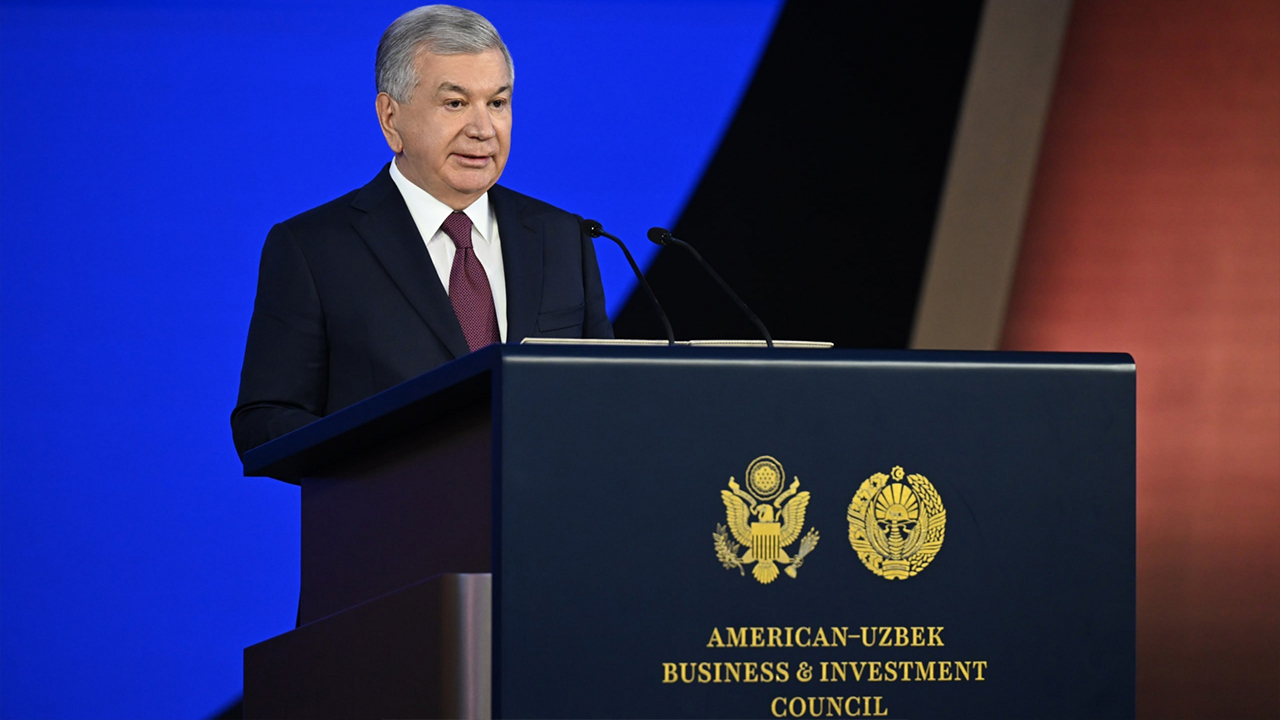
Shavkat Mirziyoyev, photo: Press Service of the President of Uzbekistan
UZBEKISTAN, October 27, 2026 / EINPresswire.com / -- Uzbekistan intends to change its approach to attracting foreign investment by offering businesses ready-made industrial projects with connected infrastructure and the necessary permits. According to Alena Lebedeva, owner of
Aurum Group and co-owner of the Tashkent Pump Plant, this model can increase the country's competitiveness in the competition for international capital, but its effectiveness will depend on practical implementation. OnOctober 19, 2026, at the second meeting of the US-Uzbekistan Business and Investment Council in Samarkand, President Shavkat Mirziyoyev announced a transition to a new plug-and-play model for investor engagement. This model envisions providing companies with prepared sites with utility infrastructure, permits, and project documentation, which should reduce the time between an investment decision and the start of project implementation.
The new approach envisions a shift in the state's role in preparing industrial investments. Instead of providing land and individual tax incentives, the authorities intend to proactively create the conditions necessary for locating production. For investors, this means the opportunity to shorten administrative procedures, reduce uncertainty over construction timelines, and more accurately plan capital expenditures.
As Alena Lebedeva notes, the duration of the preparatory phase remains a factor influencing international companies' decisions about production locations.
"When an investor considers several countries for building a plant, they compare not only tax conditions or labor costs. Equally important is the time it takes to obtain land, connect utilities, approve documentation, and launch production. Every additional month of preparation increases costs and delays revenue generation. Therefore, reducing this period can become a competitive advantage for Uzbekistan," Lebedeva believes.
From tax breaks to ready-made infrastructure.
Traditionally, competition for foreign investment has revolved around tax breaks, resource costs, and special business conditions. However, for modern industrial enterprises, infrastructure readiness is becoming increasingly important; without it, even an economically attractive project will not be able to begin operations on schedule.
Plant construction begins long before the equipment is installed. The enterprise must ensure power supply, water supply, and transport access, obtain technical specifications, and approve design solutions. If these issues need to be addressed after an investor arrives, the preparatory stage can drag on for years, creating additional financial and organizational risks.
The plug-and-play model assumes that a significant portion of this work is completed in advance. This approach is already used in industrial parks and special economic zones in various countries, but its effectiveness depends on how well the prepared sites meet the actual needs of specific industries.
According to Alena Lebedeva, it is especially important to consider the industry-specific requirements of future enterprises. A universal infrastructure does not always meet the requirements of complex mechanical engineering, metallurgy, or high-tech manufacturing, where energy supply, logistics, and utility network parameters directly impact production capabilities.
"A prepared industrial site is more than just a plot with electricity and water. For a mechanical engineering company, sufficient energy capacity, transportation accessibility, the ability to accommodate heavy equipment, and the organization of production logistics are essential. If the state takes these requirements into account in advance, the investor receives much clearer terms for launching a business. However, this requires coordination between infrastructure operators, local authorities, and the industrial companies themselves," Lebedeva emphasizes.
$12 Billion in Agreements and a New Risk-Sharing Mechanism
The announcement of a new investment model came amid expanding economic cooperation between Uzbekistan and the United States. For the meeting of the U.S.-Uzbekistan Business and Investment Council, the parties prepared a package of 54 agreements and promising initiatives worth approximately $12 billion. Subsequently, Uzbek authorities announced the signing of a corresponding package of agreements in the areas of trade, investment, and technological cooperation.
Priority areas include industrial modernization, development of energy and transport infrastructure, extraction and advanced processing of critical minerals, creation of data centers, and implementation of artificial intelligence and digital technologies.
Specifically, cooperation with the American company Wabtec includes initiatives to localize railway equipment and components, while collaboration with ReElement Technologies, Traxys, and Trafigura is related to the development of projects in the field of critical mineral resources. The announced value of the agreements reflects the potential scope of cooperation, not investments already made.
An additional element of the new model is expected to be the sharing of financial risks. Uzbek entrepreneurs will be able to participate in projects as partners with foreign companies, and the newly established Direct Investment Fund will be able to contribute to their financing. It is expected that the combination of established infrastructure and joint capital participation will facilitate the implementation of large-scale projects, especially in sectors new to the country.
Alena Lebedeva points out that such a mechanism could not only attract foreign companies but also expand the participation of local businesses in international production chains. Its effectiveness will depend on the financing conditions, transparency in project selection, and the distribution of responsibilities between partners.
"For Uzbekistan, it is important that foreign investment not only leads to the emergence of new enterprises but also to the development of the national industrial base. The participation of local companies in joint projects opens up opportunities for technology transfer, the development of new production processes, and the upgrading of specialists. However, state support should be focused primarily on economically viable projects capable of operating and developing in the long term," Lebedeva notes.
The key issue is the speed of practical implementation.
Despite the potential advantages, the transition to a plug-and-play model entails certain risks for the state. Preparing industrial sites requires upfront investments in utility networks, roads, and energy infrastructure. If the projected demand is not met, some facilities may remain unused, and the costs associated with their construction may not be recouped.
Therefore, not only the speed of administrative procedures but also the quality of planning are crucial. Successful implementation of the model requires considering the needs of specific industries, the availability of qualified personnel, regional transportation capabilities, and marketing prospects for future products.
Furthermore, it will be necessary to determine how widely the new approach will be applied beyond individual priority projects. For now, this is just the announced model for working with investors, and its practical results will be assessed after the launch of prepared sites and the implementation of the first production projects.
According to Alena Lebedeva, the transition to such a mechanism reflects broader changes in international competition for industrial capital. Companies are increasingly evaluating investment sites not only based on resource costs and tax burden, but also on the predictability of project implementation timelines.
Under these circumstances, Uzbekistan's competitiveness will depend on its ability to translate these stated advantages into a functioning system. If prepared sites truly allow enterprises to more quickly transition from investment decisions to production, the country will gain an additional tool for attracting capital to industry. Otherwise, the new model risks remaining yet another mechanism for investment incentives, the effectiveness of which will be limited by the complexity of practical implementation.

No comments:
Post a Comment