
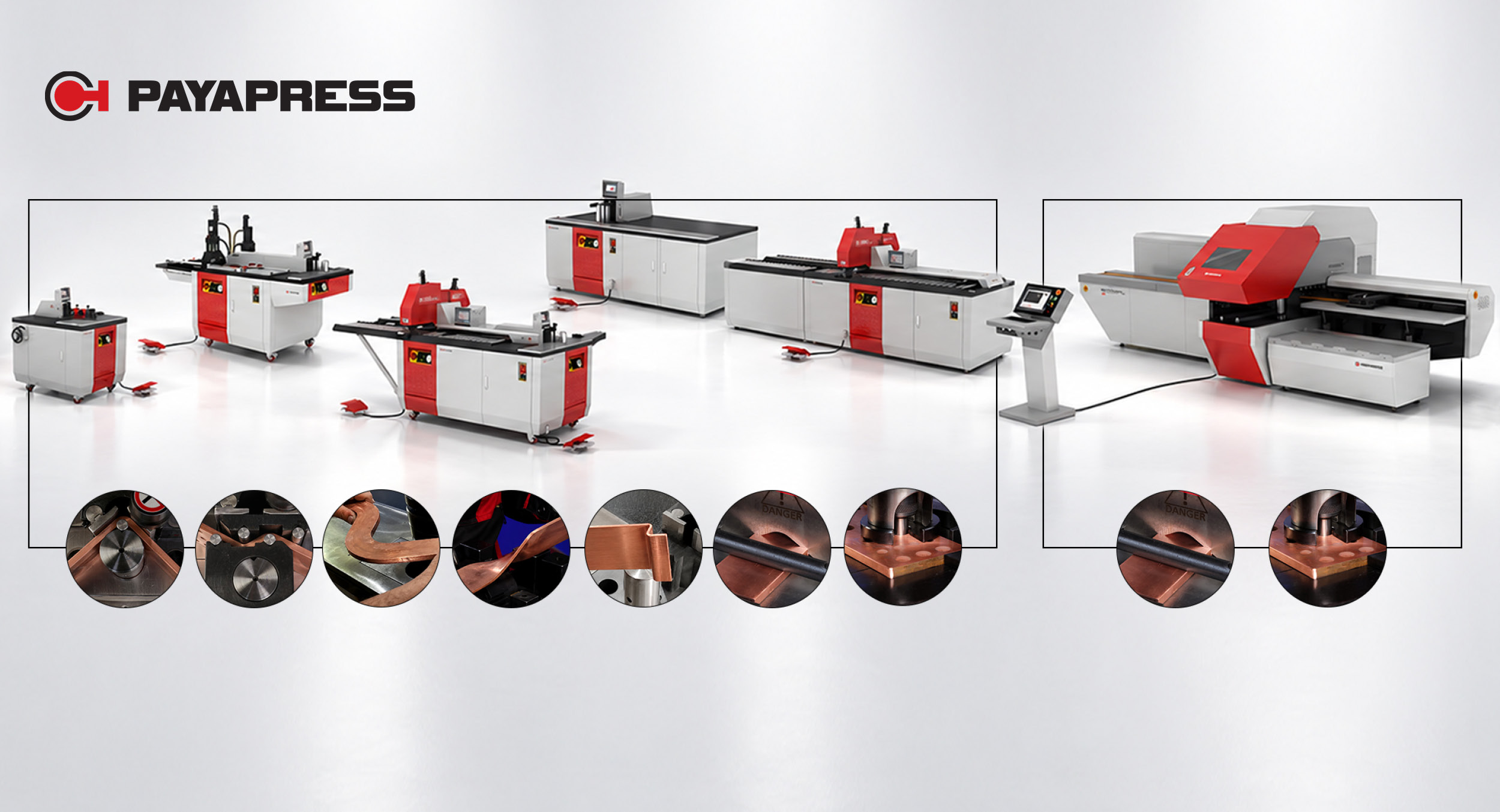
wide range of bus bar machines
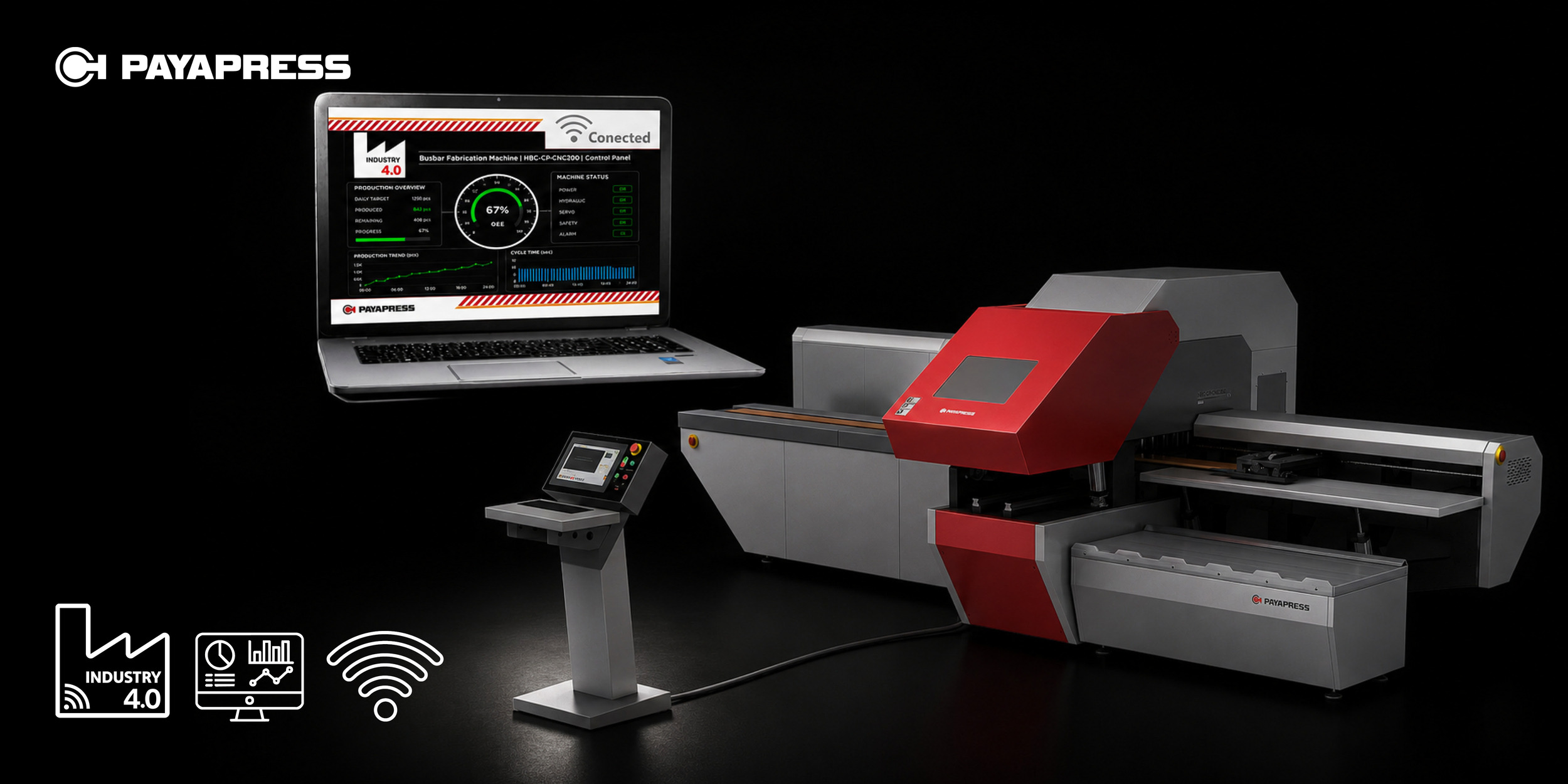
CNC machine for electrical conduit installation
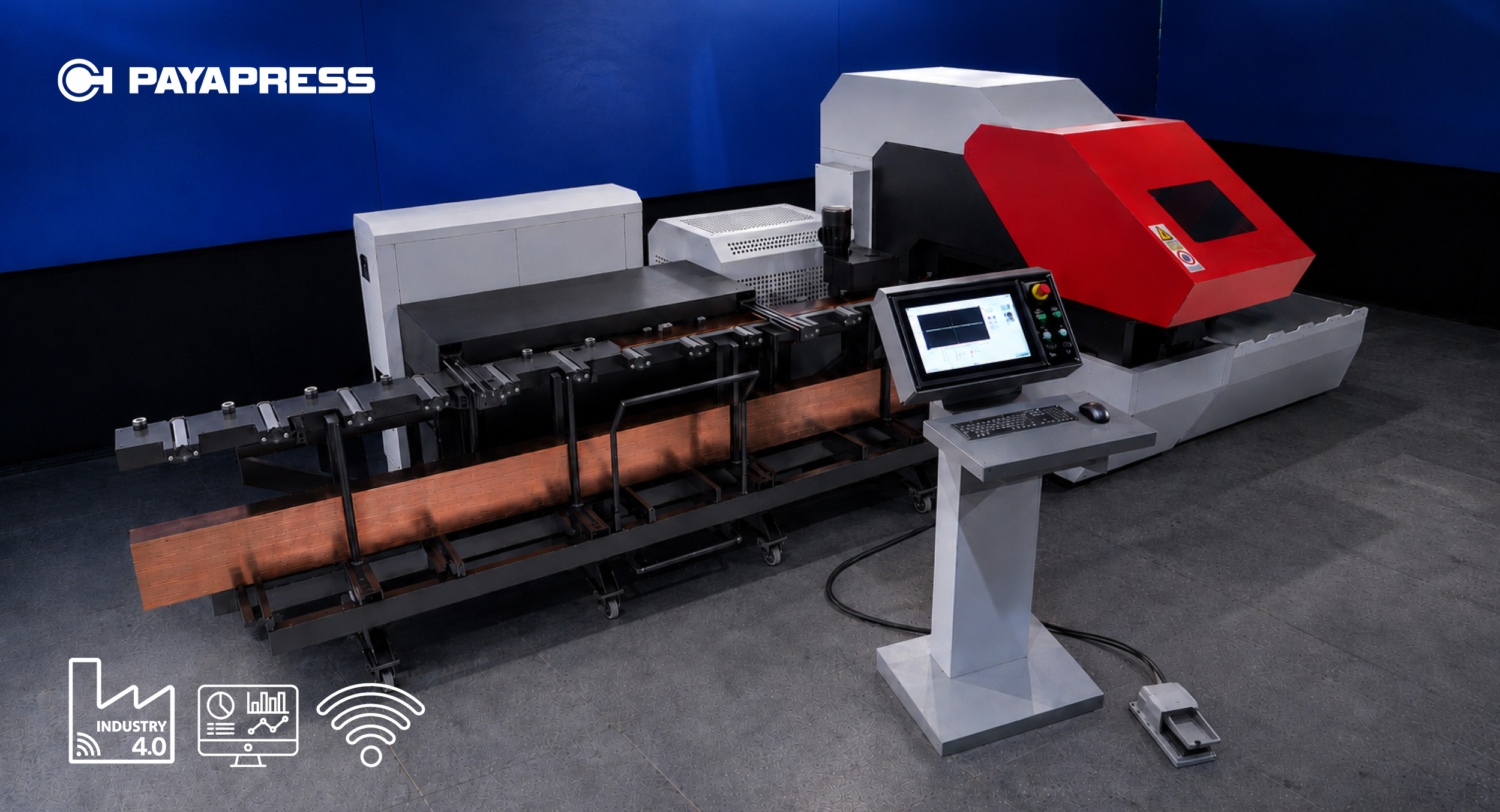
CNC busbar machine
PAYAPRESS offers a wide variety of precision machines for processing electrical busbars and sheet metal
For more than 30 years we have seen that productivity does not depend solely on having a bigger machine, but on choosing the right technology for each process.”
— Saeed Zarei, Vice President of Sales at PAYAPRESS
BARCELONA, BARCELONA, SPAIN, September 13, 2026 / EINPresswire.com / -- It's not about which machine is the cheapest, but which one fits the actual volume of parts produced each day. Here we explore the
PAYAPRESS HBC range and the CNC200, compare models, and conclude with a decision table. By the end, you'll know which model is right for you.Three operations, one bottleneck.
Manufacturing a busbar for an electrical panel requires three things from the flat bar: cutting it to size, punching the fixing holes, and bending it to fit the geometry of the assembly. Put simply; in practice, it's quite complex. Machining copper and aluminum flat bars seems easy until you try to repeat it two hundred times with the same dimensions.
The range arriving on the Spanish market. With the problem clear, let's look at the options. PAYAPRESS structures its copper flat bar machine
offering into three levels, each designed for a different production profile: The economy series is the entry point. One hydraulic unit; sequential operations. For the workshop that manufactures frames to order and doesn't require continuous operation. The HBC series—models A120 and A160—changes the game. Three independent hydraulic units. That means simultaneous work: while one operator punches, another bends, and a third cuts. It's a 3-in-1 plate processing center designed for those with orders on the table every week. The CNC series—the HBC-CP.CNC200 —adds another layer. Automatic positioning via program for punching and cutting. It's the option when serial production is paramount and drilling patterns are repeated a hundred times a day. What all three share: a digital bending indicator, the option of a programmable length stop, and a standard set of dies. The plate-making machines in the range are CE marked. Models and capacities: let's get down to business. Three stations, zero waiting. The HBC-A120 integrates punching, cutting, and bending into a single frame with three independent hydraulic units. The 120x12 mm machining capacity covers the most common cross-section in low-voltage switchboards. However, the key to this model isn't that it performs three operations. It's that it performs them simultaneously. Let's take a concrete example: in a workshop with two or three operators, this simultaneity changes the pace of the day. No one waits for the other to finish. The overall cycle time decreases. In workshops with a single operator, the benefit is different: no need to move the plate to another machine. One clamping, one reference, three operations.
The HBC-A160 shares the same three-station architecture but increases the maximum cross-section to 160x15 mm. The choice between the two depends on the cross-section of the plate you handle daily.
Where bending is key:
The bending station is the most sensitive point in the entire line. We've seen it in dozens of workshops: this is where springback complicates things. The HBC-A160 responds with a digital angle indicator and Z-axis and twist bending dies.
Bending plates up to 160x15 mm requires a plate bending machine with enough strength to deform without cracking, and a system that predictably compensates for springback.
When series production is key:
The HBC-CP.CNC200 is in a different league. Here, the operator programs the drilling pattern and cutting length on the CNC control; the CNC plate bending machine executes the sequence automatically, with chained CNC plate punching and cutting.
Cutting capacity: up to 200x15 mm. With an integrated flat bar punch and shear, the CNC200 is designed for production runs where the pattern is repeated hundreds of times.
Now, what goes wrong—and how to avoid it.
The most common errors when machining flat bars are not machine failures. They are process decisions. The most frequent error on-site is almost always the most avoidable.
Wrong die. The die doesn't match the thickness of the flat bar; the hole comes out with a burr, and the die's lifespan is shortened. The solution: choose the die by thickness and material, not by proximity in the jig.
Ignoring springback. The operator programs the nominal angle, and the flat bar remains open after bending. It doesn't seat properly during assembly. What no one tells you about the catalog: each material and thickness requires its own compensation. Digital indicators facilitate adjustment.
Measuring by hand in long runs. Measuring piece by piece with a tape measure; by the 20th flat bar, there is already accumulated deviation. The solution: the programmable length limit eliminates this source of error at its root.
Working at the limit continuously. Processing plates at their maximum sustained cross-section fatigues components and leads to premature downtime. The solution: size the machine with a margin; the typical cross-section should be 70–80% of the nominal capacity.
Who's behind it: PAYAPRESS
. PAYAPRESS has been designing and manufacturing busbar machines and electrical panel production equipment since 1990. Headquartered in Dubai; more than 1,500 customers in over 74 countries. Complete range: from the economy series to the CNC200, corner forming machines, and DIN rail cutting equipment.

No comments:
Post a Comment