
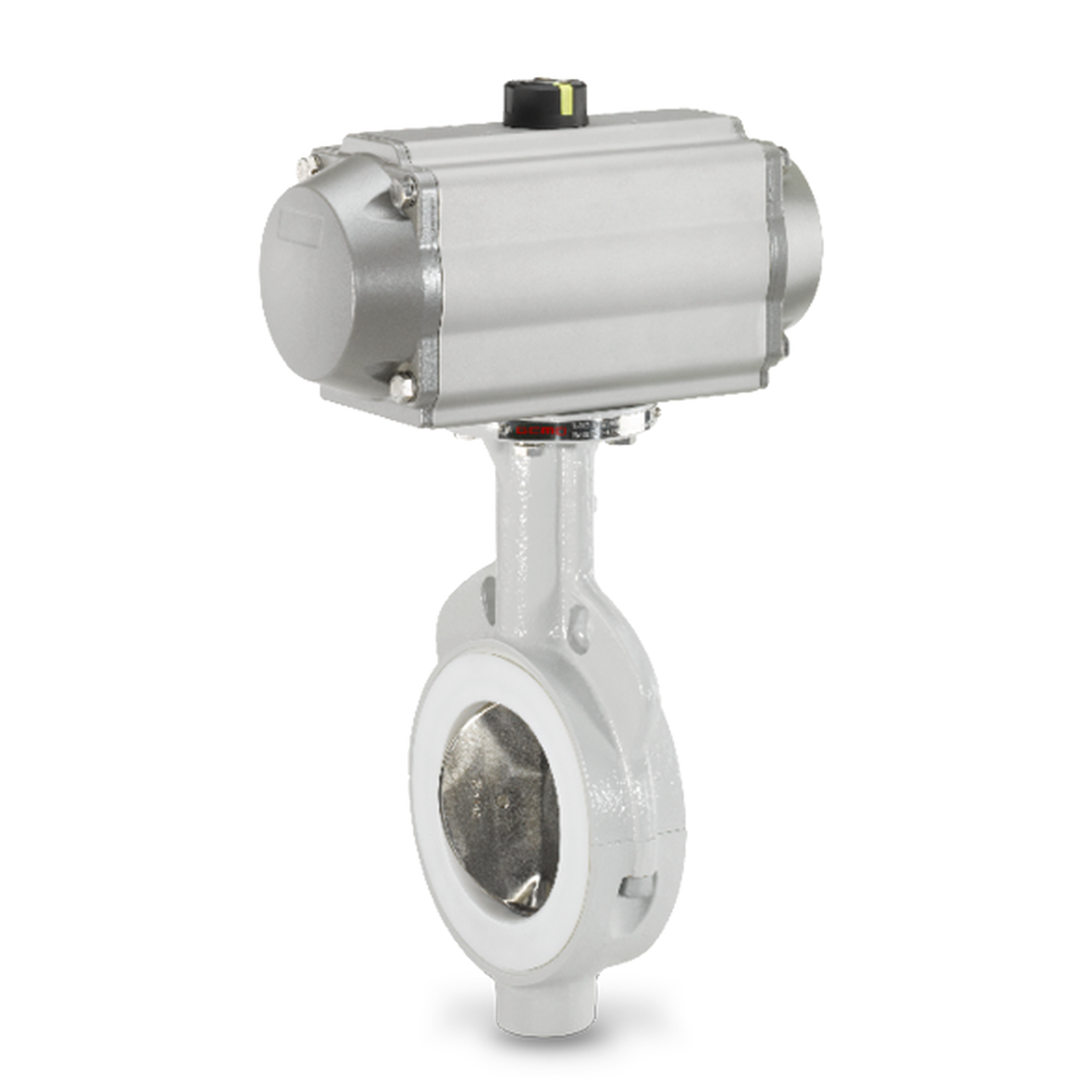
Growth in sectors such as mining and the chemical industry increases the need for technologies focused on safety and operational reliability.
CURITIBA, PARANá, BRAZIL, August 27, 2026 / EINPresswire.com / -- Although they belong to different sectors, industries such as mining, chemicals, and pulp and paper share the critical need for the safe
handling of acids and other aggressive compounds. In processes where corrosion is a constant risk, the choice of valves, actuators, and control systems determines plant availability, operational stability, and maintenance costs. In Latin America, this reality is especially relevant due to the scale and complexity of its industrial operations.Chile and Peru are home to some of the world's largest mining operations, with projects that demand equipment capable of withstanding extreme conditions. Meanwhile, countries like Argentina, Uruguay, and Brazil have a strong presence in the chemical, pulp and paper, and chlor-alkali industries, all of which are highly dependent on technologies resistant to corrosive fluids.
According to Luciano Mannino, Head of Business Development for GEMÜ in Latin America, despite the specific characteristics of each market, there is a common challenge that connects these industries. "What unites these sectors is the need to work with highly corrosive fluids. These are processes that require equipment designed to operate safely and reliably throughout its entire lifespan," he states.
For the executive, this context explains why technologies initially developed for one segment end up being adopted by other industries. "Mining is known for the abrasiveness of its processes, but there is a direct connection with the chemical industry, especially in the stages related to the treatment and handling of acids. It is precisely in these types of applications that GEMÜ has consolidated extensive experience."
In addition to the resistance of the materials, another aspect increasingly valued by the industry is the ability to have a supplier capable of handling different applications within the same plant. “Today, customers are looking for solutions that offer reliability, technical support, and availability. Having a supplier that brings together different technologies facilitates operations and helps reduce costs throughout the equipment's lifecycle,” Mannino points out.
This trend accompanies the modernization process underway in Latin American industrial plants, which are increasingly focused on increasing operational efficiency and reducing unscheduled downtime. In this context, technologies for chemical process control are acquiring an increasingly strategic role, especially in facilities where corrosion can compromise production continuity.
With over two decades of presence in Latin America, GEMÜ has kept pace with this evolution by adapting its solutions to the specific needs of each country and the various sectors in which it operates. "Our goal is to be ever closer to our customers and understand the particularities of each market. Although each country has its own characteristics, the challenges related to corrosive applications are very similar, and it is precisely in this field that we have built our expertise in the region," concludes Luciano Mannino.
About GEMÜ Brazil - With a factory in São José dos Pinhais (Paraná) since 1981, GEMÜ Brazil produces high-tech valves and equipment for various sectors. In its Industrial division, it serves the steel, mining, fertilizer, and power generation industries. In its PFB (Pharmaceutical, Food, and Biotechnology) division, it is a world leader in solutions for sterile systems used in the manufacture of vaccines, medicines, and new food and beverage packaging applications.
About the GEMÜ Group – The Group is a world leader in the manufacture of valves, measuring systems, and controls. Founded in 1964, the German company has established itself in strategic industrial sectors thanks to innovative products and customized solutions for process control. GEMÜ is a global leader in sterile valve applications for the pharmaceutical and biotechnology industries. The Group employs more than 2,000 people worldwide and has plants in Germany, Switzerland, China, Brazil, France, the United States, and India, as well as a distributor network in more than 50 countries.

No comments:
Post a Comment