
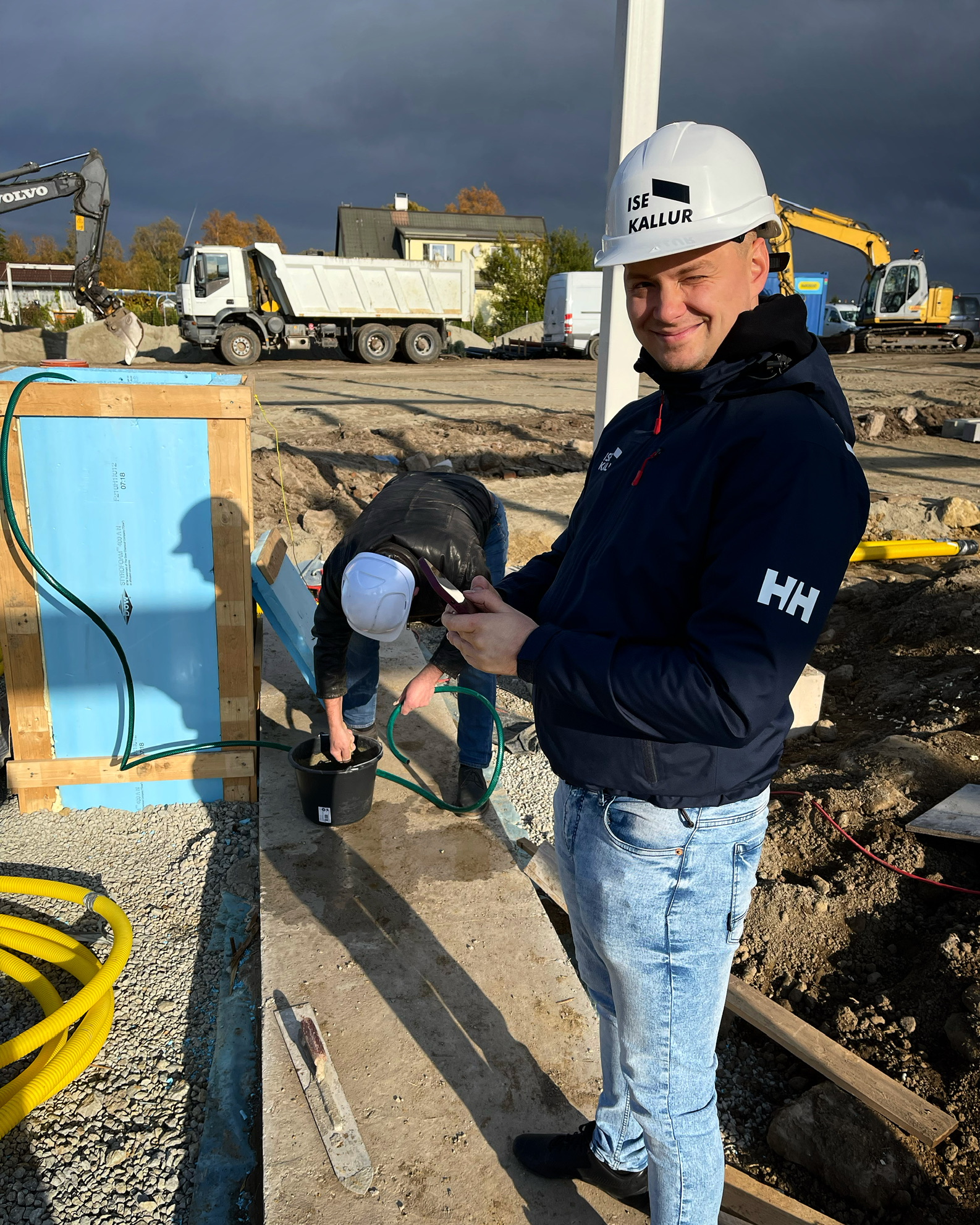
Erik Mesikäpp, founder of Isekallur.ee
Construction volume grew for the second consecutive quarter, but material price pressure remains. Erik Mesikäpp, CEO of Isekullur, sees the same challenge in the US market.
"When it comes to building materials, the cheapest ton doesn't always win. In both Estonia and the US, the actual final price is increasingly determined by the location of the material, transportation, and supply chain efficiency."
— Erik Honeybee
TALLINN, HARJUMAA, ESTONIA, September 7, 2026 / EINPresswire.com / -- The Estonian construction market is showing the first clear signs of recovery after a prolonged period of decline. According to the latest data from Statistics Estonia, in the second quarter of 2026,
the construction volume in the Estonian domestic market grew by 4.6% compared to the same period last year, and the total output of Estonian construction companies in Estonia and abroad increased by 3.8%. This was the second consecutive quarter when the construction volume increased year-on-year. At the same time, price pressure remains in the sector: the construction price index increased by 3.1% year-on-year in the second quarter and material costs by 3.9%, with the increase in the price of construction materials making the largest contribution to the growth of the entire index. According to Erik Mesikäp, CEO and founder of Isekallur.ee,which deals with the sale, transport and construction logistics of bulk materials, this means that the recovery in construction volume may not automatically mean cheaper construction for the client. “The recovery of construction volume is a positive sign for the Estonian market, but in the case of a real object, the final price is not determined solely by the price per ton of material. In the case of crushed stone, sand, soil or milled asphalt, the total cost is also greatly affected by the transportation distance, the size of the load, the choice of a suitable dump truck and the origin of the material,” said Mesikäpp. According to him, material with a cheaper price per ton from a distant quarry may turn out to be more expensive when it reaches the object than an alternative with a higher material price that is located closer to the construction object. The importance of logistics is growing especially in larger projects, where the need for material is measured in hundreds or thousands of tons. “In the case of bulk materials, logistics is essentially part of the product. If the object needs dozens or hundreds of loads, the distance to the quarry, the availability of dump trucks and the delivery schedule very quickly become a major cost component. Searching for the cheapest price per ton alone may not provide the cheapest final result,” added Mesikäpp. However, the recovery of the Estonian construction market is not currently driven by new residential construction. According to Statistics Estonia, 998 new dwellings were completed in the second quarter of 2026, which is more than a quarter less than a year earlier, and building permits were issued for 1,346 dwellings, which was 14% less than in the same period in 2025. The growth in building construction came largely from an increase in the volume of repair and reconstruction work. This suggests that work related to the improvement of existing buildings, properties and structures plays an important role in the market recovery. Such projects include, for example, the construction of driveways and parking lots, raising and leveling plots, drainage works, foundation construction, yard reconstruction and landscaping works, where large quantities of bulk materials such as gravel, filling sand, construction sand, soil, milled asphalt and other aggregates are used.
According to Mesikäpp, choosing the right material is becoming increasingly important as material prices rise. “Using the wrong material can ultimately be significantly more expensive than a few euros higher price per ton. If, for example, the foundation of a parking lot or driveway is incorrectly laid, ordering a new load of crushed stone every year will not solve the problem,” said Mesikäpp. In his opinion, customers are increasingly looking not only at the price of the material, but also at which material is suitable for a specific job, how much of it is needed, and what the total delivery cost to the site is.
Mesikäpp also sees similar problems in the much larger US building materials market, where he runs the US bulk materials marketplace AggregateMarkets.com . According to the latest data from the US Census Bureau, the seasonally adjusted annual pace of US construction spending was approximately $2.16 trillion in July 2026, and the annual pace of road construction alone was approximately $150 billion. Despite the size of the market, the main problems in sourcing bulk materials are surprisingly similar to those in Estonia, according to Mesikäpp. “When it comes to construction materials, the cheapest ton doesn’t always win. In both Estonia and the US, the actual final price is increasingly determined by the location of the material, transport and supply chain efficiency,” said Erik Mesikäpp, CEO of Isekallur.ee and AggregateMarkets.com.
AggregateMarkets.com focuses on the digitalization of the procurement and transport of crushed stone, sand, soil, limestone and other bulk materials in the US market. According to Mesikäpp, a large part of price inquiries, finding suppliers and coordinating transport in the sector still takes place by phone and email. “The client doesn’t really want to solve five separate problems – where the material comes from, which fraction to choose, how much of it is needed, which car to bring it in and what the transport price is. He wants to know which material is suitable for his project, what it will cost for the site and when it will arrive. This problem is essentially the same in Estonia and the US,” said Mesikäpp.
According to Isekallur, transparent pricing, optimization of the material source, and the ability to organize material and dump truck transportation as a single integrated solution will become increasingly important as the construction market recovers in Estonia. In the case of bulk materials, the price of the same material for a site can vary significantly depending on which quarry or warehouse it is delivered from and how efficiently the transport is organized. Isekallur.ee operates in Estonia in the field of bulk materials sales, dump truck transportation, and construction logistics, serving both private individuals, construction companies, and larger projects. AggregateMarkets.com, led by Erik Mesikäpa, is developing a digital model in the same field in the United States building materials market.

No comments:
Post a Comment