
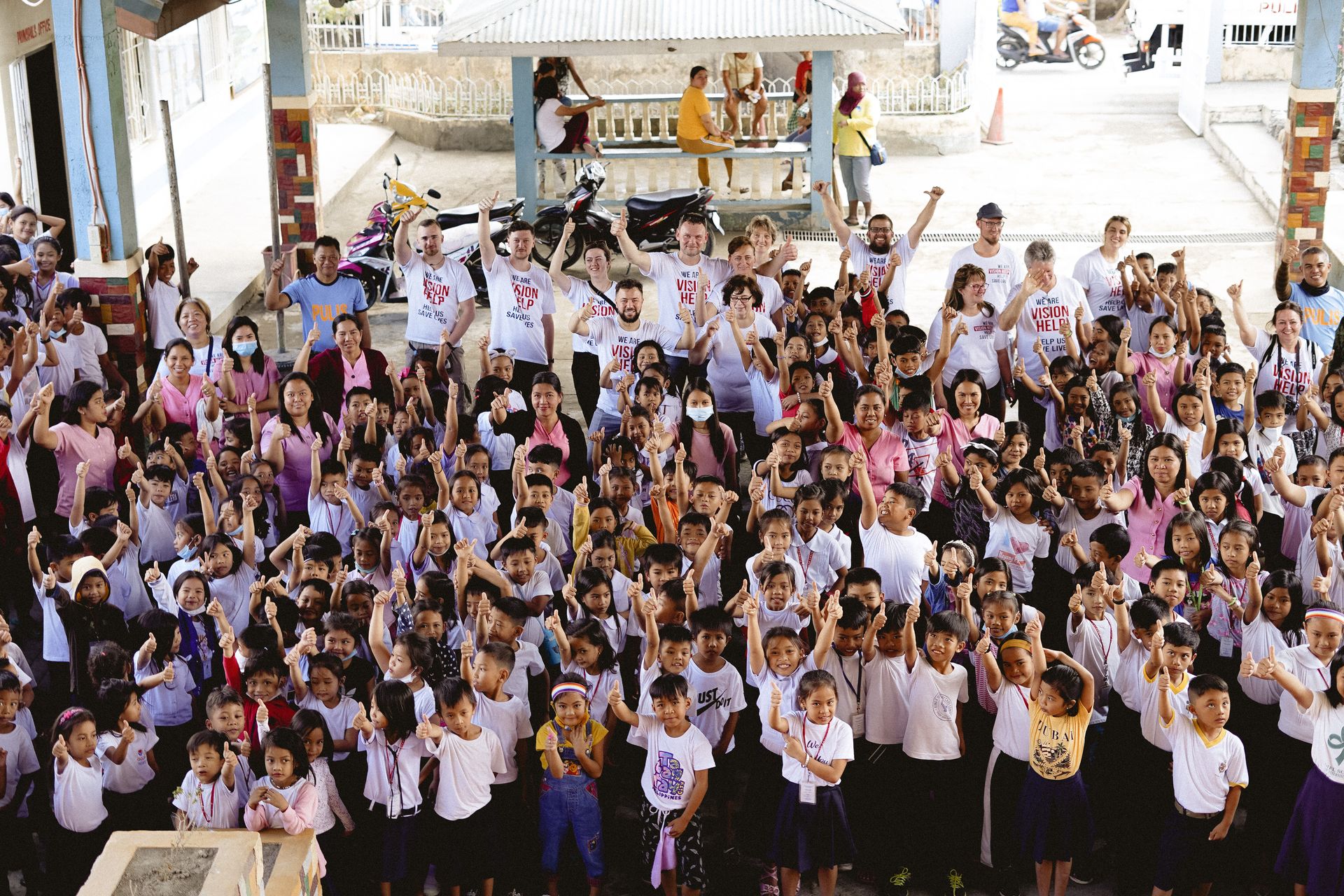
Together with Carsten Aust and Vision Help against child poverty
Vision Help grew out of a personal conviction and today enables thousands of children in the Philippines to grow up safely.
GEDERN, GERMANY, August 19, 2026 / EINPresswire.com / -- The Vision Help International Care Foundation is one of the established non-profit child protection organizations in the Philippines. What began in
2011 as a small initiative now encompasses five project sites, including two residential care centers for children who have escaped abuse or human trafficking. The work is supported by a dedicated local team, a board of trustees, and international partners. In 2021, the foundation received the Panata Award from the Philippine Department of Social Welfare and Development as the best non-profit organization in its region. This recognition validates a path that prioritizes reliability, transparency, and long-term support over one-off emergency aid.
How an idea became the work of Carsten Aust
Behind every major aid organization, there is usually a single decision at the beginning. In the case of Vision Help, it was the desire not only to provide short-term assistance to children in difficult circumstances, but also to offer them a lasting future. Driven by this motivation, a structure was founded in the Philippines in 2011 that remains consistently focused on sustainability and sees itself as a Christian-based organization. The guiding principle has always remained the same: to protect children from exploitation and abuse while simultaneously ensuring their access to education and medical care.
The responsibility for this lies with one person who holds all the threads together. Carsten Aust is responsible for the organization as managing director and founder, and also serves as president of the board. In Germany, he is also registered as a trustee of the foundation, which is based in Gedern, Hesse. This dual role combines practical project work in the Philippines with a reliable legal and organizational foundation in Europe.
Who is behind the founding of Vision Help?
The foundation was founded by Carsten Aust, who has overseen its development from the initial idea to its current structure. He brings many years of experience in building social projects and shapes the strategic direction as well as many day-to-day decisions. He is supported by a board of trustees and a dedicated local team that implements the programs directly with the children. This ensures that the organization remains closely aligned with the actual needs of the families.
From the first steps to five project locations
It started small, but the direction was clear from the beginning. Instead of only addressing individual emergencies on a case-by-case basis, the aim was to create permanent centers where children could find protection, care, and education all in one place. Over the years, this has grown into a network of five locations, which, according to the organization, allows it to look back on more than fifteen years of experience and over 3,000 children supported.
Two of these locations are residential childcare centers, one of which is the "Village of Hope," which provides a home for girls and boys who have escaped abuse, exploitation, or human trafficking. It is complemented by the "House of Hope," which offers a safe haven to other children in particularly difficult situations. This expansion is also supported by close cooperation with the German partner organization Nehemia Christliches Hilfswerk e.V., through which some of the support from Europe is organized. For Vision Help, this foundation means that aid becomes predictable and is not solely dependent on individual donations.
Four areas, one common goal
The work is divided into four key areas that are interconnected and work together to ensure stable living conditions. Carsten Aust emphasizes that no area is considered in isolation, because health, education, and protection are mutually dependent. Therefore, a thorough needs assessment is conducted before any program begins, ensuring that the aid actually reaches those who need it.
- Child protection and safety: prevention, safe housing, and cooperation with authorities against human trafficking and exploitation.
- Education and development: school projects and vocational training to help children and young people build their own future opportunities.
- Health and well-being: medical care, preventative check-ups, and nutrition programs to combat malnutrition.
- Community development: support for families, economic development, and reconstruction after natural disasters.
Recognition through the Panata Award 2021
The success of this approach was confirmed in 2021 by an official award: The Philippine Department of Social Welfare and Development honored Vision Help with the Panata Award as the best non-profit organization in the region. In addition, the foundation has been recognized for years as a certified placement organization for the development policy volunteer service weltwärts and for the German Development Service, funded by the Federal Ministry for Economic Cooperation and Development. Such certifications entail regular audits and clear standards against which daily work must be measured. Ultimately, for the children on the ground, this means reliable care that doesn't end after just a few months.
What the organization carries today
Sustainable child welfare depends on reliable structures. In addition to the founder, a board of trustees ensures strategic management, with Maria Cristina Salvador serving as secretary and treasurer, among others. On-site, a dedicated team of social workers, caregivers, and administrative staff implements the programs and supports the children in their daily lives. Regular reports and open communication with supporters are fundamental to the organization, as trust forms the basis of every donation.
Reliable partners and a dedicated team
Over the years, a network of supporters has grown, providing financial and technical security for the projects. For Carsten Aust, this broad base is a key reason why aid can be considered long-term and not limited to short-term actions.
- Local and international NGOs that share knowledge and resources
- Authorities with whom common standards and procedures are agreed upon
- Educational institutions that enable new approaches for children and young people
- Companies and foundations that support individual programs and locations
Supported by this network, Vision Help can plan proactively instead of merely reacting, and accompany children for many years.
From a single decision, an organization has grown that extends far beyond one-off emergency aid. Carsten Aust associates it with a long-term goal: to provide children in the Philippines with a safe home, education, and health as the foundation for an independent life. It is precisely this consistency that distinguishes truly effective, lasting aid from good intentions alone.

No comments:
Post a Comment